Slow churning

It’s September. The gears that fell into disuse over the summer are slowly returning to motion. I wouldn’t say I have much resembling structure in my life at the moment, but I do have some work. It feels good to have some work. I may have some results to share soon.

The kids started back to school this week and J and I (well, I should speak for myself here) feel that wisp of bereavement that always comes with letting these larger and larger creatures out of our sight. Their absence during school hours isn’t anything nearly as complete as their absence when they go to camp in the summer. We can’t resume our late night schedules and we do have to attend to meal planning and the like. When the front door opens at 3:25 (Young J) and 3:50 (Young A), we have to be ready. Ready to chase off any storm that may have gathered during the day which might be easily dispelled by timely snacks. Ready to listen to what happened in their lives while we were apart, whether good or bad. Ready to make sure they aren’t forgetting things they need to read or calculate or write or do (although Young J gets more reliable about this every year).

I’ve been accompanying my long hours at my desk with a daily exercise routine that lasts only fifteen high-intensity minutes. It’s been going well, except when I skip a day (or as I did this weekend, skip TWO) and have to find the time to catch up. I am finally caught up. (And exhausted.) I am noticing some incremental transformation in my body, which is enhanced by another project I embarked on almost a month ago: Invisalign to straighten my crooked teeth. I’m in the third week (of 42 in all) and am already seeing changes. Exciting. (Of course, before signing on to such a long commitment, I hesitated: What if I straighten my teeth only to die of cancer? What a waste of money and time that would be. Eventually, I overruled this train of thought.)

Change is not always good, as I discovered recently when the health status of a loved one changed. In the process of their examining a possible genetic basis for it, some unwelcome news of cancers shook out of my family tree. I’ve now been referred for genetic testing myself, in order to find out if my genes might predispose me to melanoma (and other bad actors not to be mentioned here). The process will take a long time to complete and I’m not sure insurance will cover the costs. So that’s another thing occupying brain real estate. As is the fact that I’ll have to go to the hospital in Baltimore for these visits, the same hospital where my father died.

My eyes have been acting up since late July. I had another cancer meds-induced flareup of iritis in my right eye just before our family trip to California in August. I spent weeks putting steroid drops in my eyes and not taking cancer meds, but may have inadvertently made things last longer by: a) using drops that I knew were expired, when I had a brand new bottle ready to go; and b) not being diligent about the drops during the final week, when I was to use them once a day. (I stopped instead.)

As soon as we got back from the trip, I had a relapse involving both eyes. Now I have a retina specialist (because my ophthalmologist apparently grew tired of treating this condition). And last Sunday, I had to see one of his colleagues who was on call, because I’ve had a sore eye for days. It hurts when I move my eye, something that had never happened before with iritis. It slowed my pace of work down the past few days. Pain is exhausting, as exhausting as fifteen minutes of a high-intensity workout (which I’ve somehow kept up in spite of the eye pain), so I’ve spent a lot of time either sprawled in bed thinking about work or sitting at my computer not doing work. I called the retina doctor again today and after 25 minutes on hold I was instructed to “take an anti-inflammatory like ibuprofen” — which I am not allowed to take because of the targeted therapy! Tylenol has been helping a bit. So does trying to get my mind off it. So I am back to work today, and plan to do some cooking.

On Labor Day, while J took the boys to a baseball game, I spent a few hours researching my grandfather in order to write a short biographical essay about him. He was a Yiddish journalist in Argentina for fifty years, but began his life in Poland training to be a teacher, and along the way he worked with Janusz Korczak, a world renowned educator who ran a Jewish orphanage in Warsaw. Last year, I was contacted by someone whose organization is interested in translating a book my grandfather wrote in Yiddish about Korczak. My day of research this week led to some interesting discoveries, including a page from another book of my grandfather’s I had never seen before, and finding a brief biographical sketch online of my great uncle, who was killed by the Nazis in 1942. (Young A is named for him.) I had not realized that like my grandfather, he too had published several books. I had not realized there was an eyewitness account of my great-uncle’s murder in a book in Yiddish which is also on the Internet. (I wasn’t able to understand much of it.)

Finding evidence of my ancestors in the world — on the Internet, even — was exciting, but I kept feeling the impulse to call the person who would have been most interested to hear about it. In the process of writing up what I did, I referred to many emails from my father, and had to fight the urge to reply to them.

Then I went grocery shopping, and came home with an unripe pineapple. As I turned it upside-down inside a vase, a trick my father had come across for faster ripening, I suddenly burst into tears. “It’s not fair!” I kept repeating, as though I were eight years old again. It isn’t fair. He should be here. I shouldn’t be having to fumble my way through my grandfather’s life story without my father to correct me, to translate for me, to enlighten me.

I miss you, Pa.

Making Me Understand: “The Waiting,” by Tom Petty and the Heartbreakers

(Making Me Understand is an occasional blog feature where I analyze, in brief or at length, what a particular work of art or an artist means to me right now.)

I’ve been at the periodic scans thing for a while now. This November will mark four years since metastatic melanoma last troubled me. I have developed my rituals for scan days, as many people who have recurrent scans do. I have a preferred scan modality, MRI. You don’t fast for an MRI, and unlike with a CT scan, the MRI contrast coming through the IV doesn’t make you feel suddenly and creepily warm and like you need to pee. I love listening to the patterns of knocks and bangs inside the tube, and I find my breathing is slow and quiet. It’s like a sensory deprivation spa treatment. I am beyond grateful that this, not claustrophobia, is my default response to this particular type of medical enclosure.

After my MRI is over, I return to the comfort of my home to wait for a message on my app. This is an innovation over my NYC protocol, where I had to book it from the MRI facility to my neurosurgeon’s office, and sometimes be in for a long wait because there were never enough exam rooms. (For CT results, I waited a full 48 hours and however long the wait was in the waiting room of Dr P’s office.) The sad part about my new routine is I don’t get to look at cross sections of my brain on a high-res monitor minutes after it was scanned, or watch the doctor flip through to compare the images from that day with the ones from when I thought I was really screwed…

I used to have post-scan meal plans (usually Greek food), but today I really just wanted to get home. I also happen to be on deadline for a pretty big translation job right now. But I’m also in the middle of a 30 day fitness challenge which brings you a fifteen-minute long video to complete every day, and the link to that video actually expires if you don’t use it within 24 hours.

So I came home from my scan and did yesterday’s skipped high intensity workout in my bedroom (a mere 20 minutes before the link expired!)… complete with suicides, Russian something-or-others, burpees, and other things I instantly repressed but will remember when I wake up sore tomorrow. When I collapsed in my desk chair afterwards, I opened a new browser tab to hear the song I always want hear while waiting for results.

People who know my musical tastes (which may include casual but longtime readers of this blog) might raise an eyebrow. This is so mainstream. It’s musical comfort food. And because I can’t have any actual comfort food right now (see above re fitness challenge, plus I recently started a tooth-straightening regimen with Invisalign and can only take the trays out of my mouth for a total of two hours per day for eating), music is everything.

I liked this song long before I ever saw the video for it, but watching the video repeatedly has elevated the track for me. It starts with a flickering title card that looks like something out of a student film, and then the screen shows a moody black-and-white freeze frame of Petty, arm in midair poised to strike his guitar. Then everything turns to color and starts moving. Tom Petty was never one of my pinups — his smoldering looks at the camera in this video don’t do much for me, except maybe unsettle me with the emptiness of his gaze, and remind me of his senseless and untimely death.

I love the awkwardness of 1981 on display here — a space where classic rock encounters new wave and tries to enter into dialogue with it by awkwardly adopting its tropes. It’s a sort of ventriloquist act — these guys in their skinny pants stiffly maneuver around a set that’s meant to suggest something like art school, complete with primary color paint splatters and geometric shapes everywhere. But they’re still playing the straight-up rootsy rock n’ roll Petty made his name with! No synthesizer sounds or drum machines whatsoever.

Lyrically, the song isn’t too germane to my waiting for scan results… until it is. There’s the chorus, most obviously:

The waiting is the hardest part
Every day you see one more card
You take it on faith, you take it to the heart
The waiting is the hardest part

But there’s a little cheerleading section here, too:

Oh, don’t let it kill you baby, don’t let it get to you
Don’t let it kill you baby, don’t let it get to you

I feel like Petty’s on my team, rooting for my scan results to be good. I wish he’d had someone on his team, not just rooting for him, but managing his pain medications so he could have avoided his fatal mistake. Thanks for this song, Tom (and Heartbreakers), and for keeping me company while I wait by the phone for what I hope will be, once again, a thumbs up.

Summer torpor

Ocean yearning

School’s out. The kids’ final report cards came in the mail… but they weren’t here to receive them. Last week, we dropped them off at camp for three and a half weeks. It is our summer vacation. Even though it’s the third summer in a row they’re gone, the sudden silence that descends over the house is still stunning. It takes time to get used to. The undone projects in our brains tumble forth, jostling for an opportunity to be addressed at last. But the pace is less frenzied. We don’t need to know in the morning what we’re making for dinner that night. I want to take things easy, but I want to get things done. I finally scrubbed the bathroom tile after weeks of thinking about it. But I also had a nice long chat on the phone with Mom, and while I was looking out the window, two Monarch butterflies floated past.

Lately I have felt my body less buffeted by the disease that insinuated itself some six years ago now, and more annoyed by normal signs of aging. A knee injury from last October doesn’t just get better on its own, I find, and the resulting inactivity has a cascade of negative effects on my wellbeing. So. Exercise. Diet. Structure. All of the things I’ve been putting off are no longer putoffable. My translation work has also been taking some interesting and exciting turns.

I wonder what the next few summers will bring, because I seem to have the luxury to, now. Come this November, the anniversary of my last gamma knife surgery in 2015, I will have been in remission for four whole years. That feels like an important milestone in terms of easing up on anxiety. My response to treatment is durable, and space age ideas are being tested for use down the road.

There’s a lot more I can be doing to “transcend the navel” and make an impact in the wider world. I don’t feel as strongly that I need to do that in terms of raising awareness about my cancer or its treatment anymore, per se — it’s a different world now, one in which I more often than not encounter people who are familiar with immunotherapy or targeted therapy, and who understand that what may have at one time seemed like a death sentence (Stage Four) may now (with a lot of luck) be merely a clinical label, applied to a patient who doesn’t do much more in a typical day than remember to take her pills.

I wouldn’t say that this is goodbye to the blog — writing here has absolutely sustained me over a number of years, and from looking at the stats I continue to see that people worldwide find their way to my blog to read particular posts. I hope they’re helpful. I never got around to classifying everything like I thought I would. (Life comes at you fast, and it’s hard to catalog as it’s happening.) But I think that overall, my focus is elsewhere these days — like how best to evict the current occupant of 1600 Pennsylvania Avenue.

I’ll check in when I have something to say and when I get scan results, as always. I hope you’ll comment when you have something to say. I’m doing well, and I’m wishing you well, too. Wear sunscreen.

Who survives?

It’s National Cancer Survivors Day.

I personally do not consider myself a survivor: I take medicine every other day to keep the cancer at bay. I have scans multiple times a year (including tomorrow), and my particular type of cancer demands that I either take extreme precautions in the sun, or else leave the house engaging in high risk behavior. My cancer may return at any point, including decades from now. Cancer is somehow involved in decisions I make every single day.

Mary Elizabeth Williams, who chronicled her experience in a clinical trial for a game-changing drug for metastatic melanoma, once asked her oncologist, after her tumors had shrunk and she was considered to be in remission, whether she could call herself a survivor. “You can only say you’re a survivor when something else kills you,” came the reply.

So often it seems like breast cancer drives the conversation about all things cancer, and it turns out that, at least for some breast cancers, the word survivor is appropriate to use. I didn’t have breast cancer. I have metastatic melanoma. So I just wanted to pipe up on behalf of the people who never really get to say they survived: We live with cancer. We can be glad and grateful to be alive… but we will always have cancer.

(Next week’s lesson: Why saying someone with cancer is “a fighter” backfires when they die of cancer.)

Awareness

What's Inside, by Wendell on Flickr, licensed under Creative Commons
What’s Inside, by Wendell on Flickr, licensed under Creative Commons

I’ve been meaning to check in here. Then I say, well, scan’s coming up soon, may as well keep postponing until you have the results from it.

And then you get word that one of your melanoma compatriots is nearing the end of her life. She’s younger than you. You somehow started following her CaringBridge site a few years ago, and the updates became few and far between, more terse, less upbeat. It’s never a good sign when a parent needs to take over posting on a child’s cancer blog, or when a spouse takes over from the other spouse.

Go gently and in peace, Michelle. I’m so sorry medicine wasn’t able to save you. It isn’t fair.

The actual day

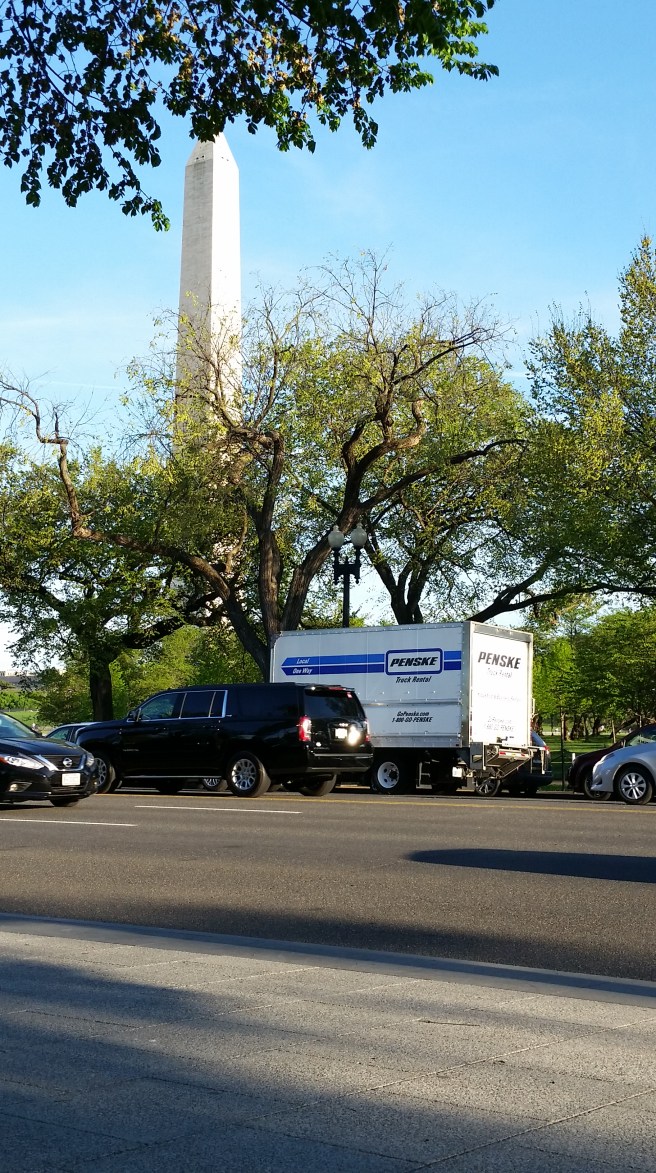
Our Nation’s Rush Hour

Six years ago I got a call from my dermatologist, Dr. A, which set in motion a chain of events that I’m still trying to parse, even at this distance. A spot on my back — not even a mole, a nothing, biopsied once and found unremarkable — had turned bad.

It would have been enough — dayenu, as we will soon sing at the Passover seder — to have dealt with melanoma once. But that wasn’t my trajectory.

To have a second thing happen on this same date means I’d need to take heed. I marked it on my calendar and get reminders every year: 2013 – Melanoma diagnosed. 2015 – Brain metastases. (When I’m gone, do those reminders continue in perpetuity? Who sees them?)

This day weighs on me precisely because I am here to remember it. And because Kate, and Jody, and so many others, are not. Walking with J down a charming downtown street in the dead center of the sweet spot of a DC spring, I told him that the reason I often have a hard time getting out of bed in the morning is the weight of knowing I have made it this far and so many others haven’t.

It’s true that melanoma treatments have shown so much progress — but the seemingly random nature of how patients respond to them turns us into freshly hatched sea turtles scrambling to get across the sand and into the waves before a predator plucks us off. (Although our odds of survival are slightly better than theirs.)

Don’t get me wrong. I’m grateful to be here. But on this fourth anniversary of the start of the latest phase of illness, I feel even more bereft about the people missing at the reunion table, the people I rooted for from afar. This is a disease that somehow, for now, leaves me be but takes others away, or else makes them suffer things I never had to contend with in order to get well — and the randomness of that is too much for even this perfect spring evening to completely erase.

Relief

stress relief, by frankieleon on Flickr, licensed under Creative Commons

Scan day came and went (all is well with my brain). All the scans begin to run together now, at this safe distance from crisis. I’m old hat now, used to scans to the point that I can argue with technicians about what I should be allowed to wear during them. The last time I had an MRI, I folded my pants legs up under the gown so they wouldn’t see I’d kept them on.

I didn’t think of wearing pants that could do that today, so I was at the mercy of the technician who had to tie my gown in the back (WTF?). They placed my IV in the tiny cubicle of a dressing room, of all places. Nothing was going as I remembered it back in the days when I went for scans at NYU. I felt a little resentment, a little rebellion starting to simmer, just at the moment when I needed to be marshaling my Zen state for the twenty minutes I’d be inside the tube. Maybe it was a little bit of my father fighting to be heard, to be remembered on this important day. (In the hospital he put up quite a struggle at various times.) No one offered me any scan music today that I could have declined. It was just me, lying down inside of a construction site’s worth of noises, and as usual, almost falling asleep by the end.

Oh, I did add an innovation to make the time pass in the tube today — Kegels. A friend posted to Facebook the other day her to-do list from immediate post-partum days when she was endeavoring to do a hundred of them a day. I used to do a lot of them, because they were part of the routine at the gym in Brooklyn where I took a lot of classes. Since moving, I haven’t yet found my exercise groove, and the renovation sort of disrupted my search for one, so the Kegels fell by the wayside. (Can one in fact do Kegels by the wayside? I’ll have to try that.) Recent biological developments indicate to me that my body seems to be heading down a one-way street towards incipient old-ladyhood — wholly unrelated to cancer and 100% not remarkable, but definitely annoying. So today, during my enforced relaxation, in lieu of listening to samba (which I have done in the past, when I was offered music) or taking a mental tour of the hallways of my old elementary school (which was amazing), I did Kegels. I was aiming for a hundred, holding each one for a count of five like I used to do at the gym. I think I got up to seventy-five by the time the scan ended. I only got one warning via intercom that my head was moving slightly. I considered that a success.

Feeling emboldened tonight by my good scan results, I engaged in a little ill-advised trawling for updated brain metastases of melanoma survival statistics on Google. I have never, ever made a habit of this, because as a former librarian I know better than to freak myself out by scanning biomedical literature I can sort of understand on its surface, but which I might totally fail to put into context. In addition to which is the fact that we don’t live or die by statistics. I am more focused on the results of my own tests. I think that if I’d made a habit of reading and internalizing journal articles from the moment I was diagnosed, I would have lost much more sleep at night, imagining myriad outcomes, not all of them mine.

Ironically, the first article I found didn’t tell me all that much I didn’t know. The treatment landscape has changed, and so have the survival rates. Every day that someone like me wakes up still healthy is another data point for the world. I am not in possession of at least one of the factors associated with significantly reduced overall survival, which is “male sex.” I spun this information in a positive way for myself, since I haven’t exactly been thrilled of late to be dealing with “female sex” stuff.

I also noticed that the treatment I have followed/swallowed since 2015, which is a combination targeted therapy of BRAF/MEK inhibitors, was associated with the shortest median overall survival rate after brain metastases were diagnosed (12.7 months). I have now quadrupled that survival rate. I guess I’m happy to do a deep dive into the medical literature, if it confirms what I already suspect about myself — that I am a lucky, lucky person, and a medical anomaly besides. I wish that researchers could figure out the secret to my success and make it propagate to others. Is it all the chocolate?

It was a pretty eventful day after my scan, because I had to finish proofing some translation work with a deadline of today, and because I had to drive to the airport in the afternoon to pick up J, who returned from twelve days in Thailand, on a solo trip celebrating his Significant Birthday (because he didn’t want a party). We missed him terribly around here, and we’re so happy to have him back. He took a couple of cooking classes there, so I am looking forward to homemade curry, and I’m looking into planting morning glories — for flowers, but also, apparently, to eat. I’m grateful to have a break from scans now until my CT in June. For now, I can go back to the rhythms of a life mostly untroubled by cancer, never entirely forgetting how lucky I am to have that option.

What’s good

World Class Traffic Jam 2, by b k on Flickr, licensed under Creative Commons

April already. Young J observed how quickly the days seem to be flying by. And he’s only twelve. He has no idea.

After a couple of months of work, we are finally getting used to the house not being overrun with workers. Our renovation is finished and the painters did their good work and the house finally feels like it is ours. Well, ours, with boxes. Baby steps.

I sat at my desk this week for the first time in ages to get some long-postponed work done. I was translating an interview with the head of design for a major car company. Unlike the interviews I usually translate for this client, which tend to be with workers or managers on the factory floor speaking about their specific jobs, this guy is giving a big picture overview of how a concept becomes a car. It’s fascinating. I feel fortunate to get to do this work, and can’t believe I get paid too. Also, he said he sketches every day. Puts pencil to paper. Every day. This was a good reminder to me that I should probably do the same if I’m ever going to actually write a book.

April is always a bit triggering for me, since two of my three cancer diagnoses came down this month. I find I can no longer easily access my feelings in the immediate aftermath of my initial diagnosis in 2013, because it seems like a different era of geologic time. My kids were small, I was still young, and I was not yet succumbing to the physical and mental lumpiness of solid middle (emphasis on middle) age. I was pretty freaked out, of course. I do remember taking the call from my dermatologist, Dr. A, around midday, before the kids were back from school. I called J and stood by the front window of our old apartment, probably blinking back tears while looking at the ginkgo tree with its leaves just emerging. It would have been sunny.

Of all the things I resent about melanoma, I’d put fear of the sun near the top of the list. I love the spring and summer. I love a hot, humid day. I love the feeling of sunlight on my skin. No one told me that feeling would prove as dangerous as heroin or smoking, until it was. All the UV protective clothing in the world can’t make me feel better about having to live in fear of the sun for as long as I’ve got. (Although if your new paradigm of swimsuit shopping means picking out new full length swim tights and long sleeved rash guards, you may find you don’t miss the often-humiliating exercise of buying more revealing swimwear.)

My initial diagnosis memory of April was surpassed forever by the 24-hour period in mid-April 2015, where I went from being NED in my lungs to having a brain full of tumors. The blog post I somehow wrote while language-impaired is a source of fascination now — and how lucky I am to be able to write that. In the middle of a translation work marathon yesterday, I paused to remember how worried I was back then. I thought that melanoma was going to permanently steal one of my superpowers, language. I remember lying in bed wide awake at 4 a.m. when the steroids kept me from sleep, chatting in Italian with friends in Europe who were already awake. I was desperate to make my injured brain prove itself still capable of coherent expression in any language. I’m surprised I didn’t blow a gasket. And there I was yesterday spending five hours at my computer translating from Italian, then unwinding for an hour by reading a novel in French. (I should maybe seek out some slightly more brainless pursuits.)

I didn’t mean for this post to get morose. Yes it’s April, but it has now been four years since my last big crisis, and I’m still learning new things every day. I’ll keep this song in rotation this month, of course, because of the mordant humor of the line, “What good was cancer in April? / No good at all.” Thanks for that, Lou, if you’re listening. You couldn’t have known, nor could I when I first heard it, how prescient that lyric would be.

Young A at 9

Leaps & bounds

Today, nine years ago, I had the chance to have a transformative life experience for the second time. J and I went into the hospital one day, and came home the next with a new human: Young A had joined our family.

Birthing Young A was good preparation for the whirlwind it has been to be his parent, because it forced us to put aside the notion that his trajectory would resemble his older brother’s in any way. At times we have forgotten this important truth, and it has come back to bite us. Of course Young A is his own person.

Young A’s early childhood was influenced by my illness. He was three when I was first diagnosed, four and five when I went through my metastases. He’s always ready to cheer my good scan results, but I always wonder how that early experience with having a parent be ill has affected him. I’m glad I’ve been able to come back from that brink, and show him a durable response to treatment.

Following our recent move, our family was somewhat divided, with J and Young J pretty much uniformly positive about it, and with Young A and me feeling a bit less excited and more nostalgic for our old home, our old lives, our old friends. Young J has generally had an easier time adjusting to his new school and routines. I was genuinely worried about Young A and his social life, for a bit.

Then came his birthday. Because half of our home is under construction, and will be for what feels like the foreseeable future (much to Young A’s chagrin), we couldn’t host the sleepover he very much wanted to have. The upheaval in our home also kept us from planning any sort of celebration for his birthday, until it hit us that the day was quickly arriving, and it was a day off school, and we had to at least try to make something happen for him. I asked Young A, with some trepidation, to make a list of kids to invite. I was so pleased when he came up with six names. I was even more pleased when four of those kids were available for a party today, even though we waited until the last possible moment to make our plans.

This couldn’t have worked in Brooklyn, I kept thinking to myself, as I followed the kids around the indoor trampoline park. Back in Brooklyn, a place like that on a day off school would have been totally overrun with kids. And Young A’s friends would have been booked for weeks already. And yet here we are, living in a new place, and it couldn’t have been easier. Including Young A and Young J, we had six children at the party, easily transported in our two non-minivan vehicles from bouncing to pizza.

What’s more, when, at one moment, highly-strung Young A became upset at another kid’s interpretation of the rules of dodge ball (there basically were no rules), we saw his friends prop him up. They asked what was wrong, they redirected him someplace else, and refused to let his frustration spoil his day.

Seeing what sweet new friends Young A has surrounded himself with did my soul a lot of good. I’m no longer worried about him in the way I had been. He’s clearly making his own path in our new home — and seeing this happen gives me the peace of mind that is so dear to a parent.

One year gone

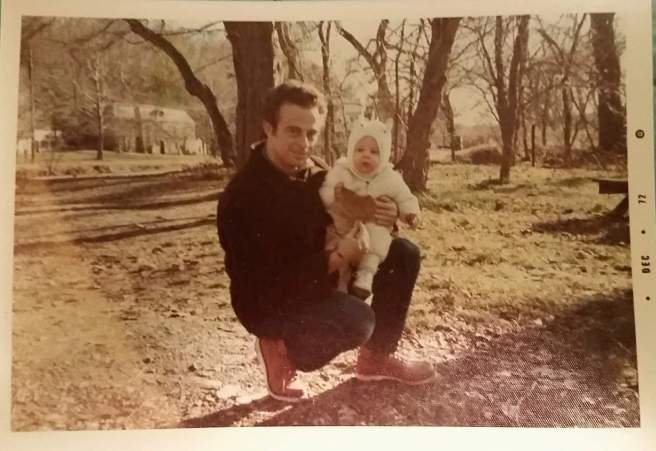
Pa, when he was very young

My father left us a year ago. He died just past midnight, one day past his 82nd birthday on January 30. This means we will have to clear a double hurdle as the anniversaries approach. And this is, of course, in addition to the fact that his date of death by the Jewish calendar has already passed. On that date, we unveiled his tombstone. We gathered at the cemetery in freezing (but thankfully sunny) air. We spent a few minutes there, tears freezing on our faces. We left stones behind as our calling cards, then repaired to my brother’s house and reminisced out of the elements. We will make further visits once winter recedes.

What remains for me, between now and February 1 is recalling, and trying not to recall, the way things ended for my father — hospital-acquired conditions taking him from bad to worse, conferences with medical professionals becoming ever more dire, and treatment options decreasing to only interventions we knew my father never would have wanted. To confront this anniversary is to remember all of these things, and more — our terrible bedside vigil, the monitors slowing, then ceasing their beeping. There was the drive my mother and I made, away from the hospital in the middle of the night, having left my father’s body to arrive at my parents’ home, every inch of which seemed ready for Pa’s imminent return. I still don’t know how I managed to make that drive. I remember we couldn’t seem to make ourselves go to sleep that night, because sleep seemed too much like an acknowledgment of what had just happened.

There have been many unusual, coincidental encounters with my father’s memory in the past year. When I went to catalog them in order to read them out at the unveiling of his gravestone, I winnowed down the list to seventeen instances. His presence persists, in my mind and in the physical world. I have made my peace with his appearance in the most random places, at the most random times, and in various forms. Twice he has appeared to me in the form of a strip of Velcro attaching itself to my clothes: the first time, at the funeral, and the second, on Father’s Day.

But some reminders of Pa are less random. Nearly every day, I drive past the street where my father pulled over his car for the last time, having experienced a brain hemorrhage while at the wheel. Every time I pass the spot, I marvel at what it must have taken for him to manage it. It’s off a fast road. He would have taken, I think, a left turn, which meant he probably waited for a signal. He then parked the car and got out so someone might see him. This is not the spot where my father began to die. It is the spot where he tried very hard to keep living.

I think about these last moments of my father out in the world, before the medical interventions that made his final two weeks intolerable, and ultimately ended his life. I think about these moments because I think I have experienced something like them: The slow realization that my lung had collapsed the day after my biopsy, and my determined journey by subway and bus to the ER. Or, later on, the morning I was losing my capacity for language, when I went through with a half day of work and a staff meeting and lunch with a friend before finally heading (again by public transportation) to the ER to discover my brain was riddled with tumors.

What these experiences have in common with my father’s, perhaps, is the relative calm with which we contended with them. In the face of near-certainty there was something mortally wrong with us, we each chose to put one foot in front of the other. If you can still walk, and talk semi-coherently, all is not lost. If you can joke about your situation while you’re in the midst of it, nothing can be all that wrong. I didn’t know how closely I held these beliefs before I got cancer, and I wouldn’t dare to say that this way of living is responsible for my survival. (My father, after all, did not survive.)

What it is, maybe, is a way of meeting the world, a way of being in the world. It takes stubbornness, and it takes resilience. My wish is to exhibit both of those traits even when my life is not at risk, because it is so good to have the confidence that comes along with it.

Pa is no longer here for me to talk this over with, and he won’t comment on this post. So, at a year’s distance from losing him, I’m reverse engineering his personality, seeing which components of it migrated to mine, and working out what parts of it I need to keep.